Looking for more space, a polished suburban feel, and a north San Antonio address that stays in demand? Stone Oak often lands on buyers’ short lists for exactly those reasons. If you are considering a move here, it helps to understand how the area is laid out, what homes typically look like, how pricing compares, and what questions to ask before you write an offer. Let’s dive in.
Why buyers consider Stone Oak
Stone Oak is a long-running master-planned community in north-central San Antonio. According to the Stone Oak POA, the first master plan was filed in Bexar County in 1985, and homes inside the boundary may follow POA master-plan restrictions in addition to subdivision HOA rules.
For many buyers, that structure is part of the appeal. It creates a more organized community experience, but it also means you should go into the process with your eyes open about dues, design rules, and neighborhood-level differences.
Regional planning data describes Stone Oak as a relatively new area with a strong single-family presence. About 67% of the housing stock is detached homes, 54% of units are owner-occupied, and the median age is 37.1, which supports the area’s reputation as an established but still newer-feeling suburban market.
What Stone Oak homes are like
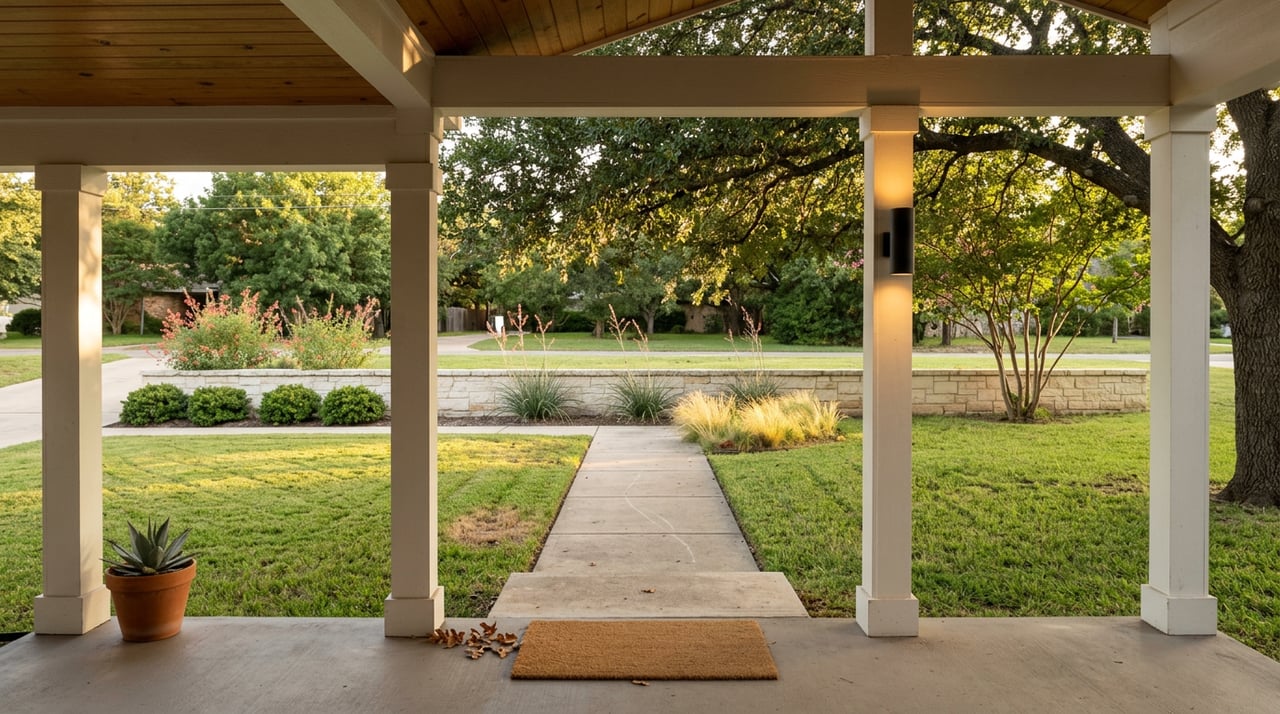
If you picture historic bungalows or dense urban infill, Stone Oak is not that kind of market. Buyers here are usually comparing a newer suburban product, with homes that commonly feature two-story layouts, brick exteriors, and mixed brick, stone, or stucco finishes.
A current neighborhood guide describes many Stone Oak homes as having small front porches, large windows, and archways. Lot sizes are reported in a broad range from about 6,000 to 26,000 square feet, which means the feel can vary quite a bit depending on the subdivision.
The age of the housing stock is also important. Regional data shows a median construction year of 2005, with 43% of homes built from 2000 to 2009 and another 21.5% built from 2010 to 2019. That gives you a practical clue about what to inspect closely, especially roofs, HVAC systems, windows, and other major components that may now be in midlife condition.
How Stone Oak compares on price
Stone Oak sits above the broader north-side average, but below some of the area’s more expensive luxury pockets. Redfin reports a May 2026 median sale price of $463,294, while Zillow’s typical home value is $446,399.
That matters because North San Antonio’s median sale price was reported at $389,869. In simple terms, Stone Oak is usually not an entry-level target. It more often appeals to buyers who want to move up in size, location, or overall neighborhood setting.
Nearby pricing helps show the range buyers are often weighing. Encino Park was around $400,000, Timberwood Park around $510,000, Rogers Ranch around $694,000, and The Dominion around $920,000. Stone Oak fits in the upper-middle part of that spectrum.
Even older planning data points in the same direction. A 2022 city planning analysis placed average listing prices around $411,000 in 78259 and $499,000 in 78258, compared with about $301,000 citywide, showing that this area has been positioned above the San Antonio average for some time.
What the market pace means for you
Stone Oak is competitive, but not every listing demands an aggressive offer over asking price. Redfin says homes usually sell in about 60 days, some receive multiple offers, and 33.1% of homes had price drops in the latest snapshot.
That mix tells you something useful. Well-presented homes in strong locations can still move quickly, but buyers may also find room to negotiate when a listing is overpriced, dated, or less well-positioned within the community.
This is where subdivision-level analysis matters. The Stone Oak name gives you a general market identity, but exact value often depends on the home’s age, lot, HOA setup, and access to major corridors.
Why subdivision details matter
One of the biggest buyer mistakes in Stone Oak is assuming every section works the same way. It does not. The community label is broad, and the day-to-day experience can shift from one subdivision to another.
The Stone Oak POA says owners inside its boundary follow POA master-plan restrictions in addition to neighborhood HOAs. Some neighborhoods may also have a third HOA tied to a pool or recreation area.
The current residential POA assessment is $116 annually. Beyond that, your actual dues and rules can vary depending on the specific subdivision and any added amenity layers, so it is important to verify the full HOA structure before making an offer.
What HOA rules may affect
HOA structure is not just a line item in your monthly budget. It can affect how you use and maintain the property over time.
The Stone Oak POA says assessments help enforce architectural guidelines, maintain 11 miles of landscaped medians, support beautification and conservation projects, and fund community events. The POA also states that consistent rules are part of protecting property values.
For you as a buyer, the practical takeaway is simple: review restrictions early. Ask whether there are design requirements, lease restrictions, rental caps, extra gate or amenity fees, or approval rules that could affect your long-term plans.
Commute and daily access in Stone Oak
Stone Oak is a car-first market, so daily logistics deserve real attention. Point2 estimates the average commute at 21 minutes and says 99% of residents use a personal vehicle.
That means the same home can feel convenient or inconvenient depending on where you work and how often you travel. A location that works well for northbound commuting may feel very different if your regular route takes you downtown, to the airport, or to the medical center.
Transit is available for some downtown-bound commuters. VIA’s Route 7, the US 281 Stone Oak Express, connects the Stone Oak Park & Ride to downtown and the airport, and VIA lists the park-and-ride at 22139 US Highway 281 North with 400 parking spaces.
Everyday convenience beyond the home
Stone Oak is more than a cluster of subdivisions. The broader regional center includes a strong commercial base that supports everyday errands and services.
City planning work cites about 5.6 million square feet of commercial and industrial development, 18 hotels, and a strong presence of health care, retail, office, and educational uses. For buyers, that often translates into easier access to groceries, dining, medical offices, and other routine needs.
Public amenities also add to the area’s appeal. The City of San Antonio lists Stone Oak Natural Areas at 20395 Stone Oak Pkwy, and the Parman Branch Library notes that it serves the surrounding area and sits just south of Panther Springs Park with trail access.
School-zone verification matters
School access is a recurring part of many Stone Oak purchase decisions, but you should always verify zoning by exact address. NEISD’s official pages show Stone Oak Elementary, Bush Middle School, and Reagan High School in the Reagan cluster.
Because Stone Oak is large and includes multiple subdivisions, it is smart to confirm the assigned schools directly for any property you seriously consider. This is especially important if school attendance boundaries are part of your home search criteria.
A good rule of thumb is to verify school zoning, HOA dues, and restrictions at the same time. Those three items often shape both resale value and day-to-day satisfaction.
Questions to ask on a Stone Oak home tour
When you tour homes in Stone Oak, try to go beyond finishes and staging. The most important differences are often in the details that are easy to miss on a first showing.
Here are smart questions to ask:
- Which subdivision is this home in, and which HOA or POA rules apply?
- What are the monthly or annual dues?
- Are there added pool, gate, or recreation assessments?
- How old are the roof, HVAC, windows, and major systems?
- What does the commute look like during rush hour to your usual destinations?
- Which school zone applies to this exact address?
- Which amenities are actually walkable, and which are a short drive away?
- Are there any lease restrictions, rental caps, or design rules that could affect future flexibility?
Best fit for Stone Oak buyers
Stone Oak can be a strong match if you want a north San Antonio location with established housing, suburban home styles, and mature access to shopping, services, and public amenities. It can also make sense if you are looking for a move-up market that sits below some of the area’s highest-priced luxury neighborhoods.
At the same time, it is not a one-size-fits-all choice. Pricing, HOA complexity, and commute patterns can vary enough that the best buying strategy is to compare homes subdivision by subdivision rather than relying on the Stone Oak name alone.
If you want clear, step-by-step guidance while you compare Stone Oak options, Norma Lira can help you evaluate pricing, commute fit, HOA details, and offer strategy with a local, practical approach.
FAQs
What makes Stone Oak different from other North San Antonio neighborhoods?
- Stone Oak is a master-planned community with multiple HOA layers in some subdivisions, a newer suburban housing profile, and pricing that generally sits above the broader North San Antonio average.
What price range should buyers expect in Stone Oak?
- Recent data shows a median sale price of $463,294 and a typical home value of $446,399, though actual pricing varies by subdivision, home size, age, and condition.
What types of homes are common in Stone Oak?
- Buyers will usually see mostly two-story single-family homes with brick, stone, or stucco exteriors, larger suburban layouts, and homes largely built from 2000 forward.
What HOA fees should Stone Oak buyers check?
- The Stone Oak POA lists a current residential assessment of $116 annually, but buyers should also verify any subdivision HOA dues and possible extra amenity, gate, or recreation assessments.
What should buyers verify before making an offer in Stone Oak?
- Buyers should confirm the exact HOA structure, total dues, restrictions, school zoning, commute fit, and the age and condition of major home systems before submitting an offer.
Is Stone Oak a competitive market for homebuyers?
- It can be competitive, especially for well-presented homes, but current data also shows price drops in part of the market, so not every listing requires an aggressive over-ask strategy.